

RESILIENCE IN DIVERSITY
DIVERSIFY YOUR IDENTITY PORTFOLIO FOR LASTING RESILIENCE

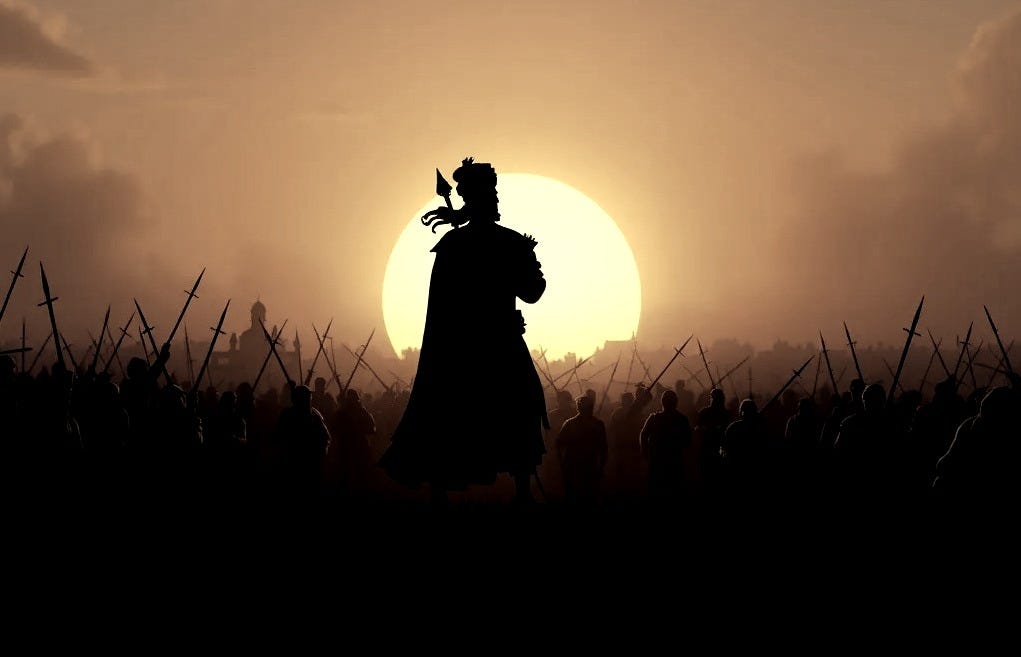
Identity is the way people see themselves, and how they signal who they are in relation to others.
In the era of identity politics, you’d be forgiven for thinking race, religion, nationality, sexuality, and gender identity pack the biggest punch when it comes to wellbeing. After all, expressed solidarity among folks with shared lived experience can be empowering.
But there are other ways to identify.
Thank goodness. Tribing up over one-dimensional arbitrary characteristics would be a worrying recipe for societal fragmentation (though it works wonders for market segmentation).
As well as identifying with arbitrary demographic characteristics, people also identify with personality traits, preferences, and possessions.
For example, a white Australian girl who sees herself as fun-loving but good at spelling, loves Jesus, likes My Little Ponies, and has twelve of them is a clear and stable enough identity for an eight-year-old who is at the front end of life’s learning curve.
But adults are expected to have developed beyond identification with arbitrary demographic characteristics, personality traits, preferences, and possessions.
Indeed, coming of age is defined across cultures as a transition into adult responsibility, commitment, and belonging.
Perhaps, then, it should come as no surprise that our wellbeing is heavily shaped by the more active aspects of our identity: the roles we play.
The things you do and the ways in which you relate to others are what shape your roles. So, in a sense, you are what you do plus how you engage.
My own research has shown that a greater diversity of active roles is associated with greater resilience. And there is an ever-growing body of research that indicates a clear and stable sense of self based on these roles is essential to long-term mental health (see examples here, here, and here).
Active roles can be thought of in terms of our personal relationships (sister, friend, elder), our work (teacher, caregiver, entrepreneur), the activities we consistently engage in (gardening, oil painting, podcasting), or our association with the groups we belong to (parkrun regular, soup kitchen volunteer, union member).
If we’re clear on what our roles are, and consistently engage in a variety of them, then we are buffered from the consequences of many of life’s stressors – largely because our roles are what connect us to our social support networks and affirm who we are in relation to our values.
Most people will notice something of a theme in the roles they play, and this is worthy of note. While role diversity is important, we don’t necessarily expect to be eclectic. For our roles to be an expression of our values, contributions, and belonging, they will likely fit certain archetypes.
ROLE ARCHETYPES
There are 10 core role archetypes that have persisted across diverse cultures and many millennia. You will likely see yourself in at least one of these.
PROTECTOR
The protector guards against threats and establishes safety, primarily by defending and maintaining boundaries – in literal and metaphorical terms. Throughout history and in modern times, the most typically recognized protector roles are warriors and security personnel. They could be soldiers or police, or variations thereof. As boundaries can include not just territory and resources but also laws, norms, and values, protectors can also take the role of advocates standing against injustice and supporting those who are cannot adequately support themselves (e.g., due to limited personal capacity, disability, or disenfranchisement).
PROVIDER
The provider brings in resources required for survival and growth, primarily meeting material and survival needs. This has historically been the domain of farmers, hunters, and foragers. And as societies industrialized, providing has increasingly also been thought of in terms of generating wealth, providing financial support, and creating opportunities for others to thrive. While we all need to provide for ourselves and our families, the provider archetype does this at a larger scale that can meet the needs of the broader community or society as a whole.
LEADER
The leader sets the direction and unites people under a vision or purpose. This is an executive role involving strategic planning and decision-making. Historically, a leader might have been a tribe or village chief. In modern times, they might be a C-suite executive or a politician. There are many other settings in which leadership is required, however, and the leader archetype knows how to unify, plan, and execute regardless the scale or status of the endeavour.
NURTURER
The nurturer supports and sustains across the developmental cycle, operating with practical and psychological tools to administer compassion. Throughout history and in modern times, nurturing has involved raising children, tending to the sick or elderly, and maintaining the wellbeing of the tribe or community. Nurturers play a crucial supportive role in the survival and wellbeing of any group, though their work is often under-recognized in modern society as it tends not to be well remunerated, if at all. Nurturers staff childcare, elder care, palliative care, and disability care facilities. They volunteer at soup kitchens and wildlife sanctuaries. And they are the ones who will nourish you with boxes of home-cooked food, clean your house, or tidy up your backyard when you’re sick or grieving. Without nurturers, none of us would get off the starting blocks in life, much less thrive into success in any other role.
HEALER
The healer restores, repairs, or renews what’s broken, whether that’s physical, mental, or relational. Historically, this work has been done by individuals with recognized skill and wisdom – the healers and the shamans. In modern society, this work is done by physical and mental healthcare practitioners, mediators, and spiritual guides. The healer archetype is also often found in less conventional spaces where people go for a more esoteric form of insight and guidance.
SAGE
The sage is best thought of as an educator or knowledge keeper. They cultivate, preserve, and pass on wisdom, knowledge, and skills to promote growth and insight, thus preparing the next generation. Historically, everyone as played this role to some extent, as we all teach our children, and pass on knowledge and skills to our colleagues and the next generation of our workforces. And with the privilege of older age comes the status of elder, with wisdom that has been earned though experience. In modern society, the sage role tends to manifest most formally in education professionals, mentors, and thought leaders. Historians and librarians also play crucial roles in cultivating and preserving the knowledge and wisdom that enable us to build a legacy on the foundation of our history.
BUILDER
The builder builds systems, structures, and innovations, using their skills to solve practical problems. Historically, this role was played by many in society, as shelter was integral to survival and required many capable hands. As society has become increasingly complex, so has the role of the builder, offering up feats of architecture and engineering that enable a way of life unparalleled by the emperors of old. Craftspeople and artisans are also builders in that they craft items – from furniture to appliances to tools – that solve day-to-day problems. In this sense, most entrepreneurs are also builders, as they develop products that solve problems, whether that’s hardware, software, or systems of commerce, and so forth.
EXPLORER
The explorer forges into the unknown to bring back discoveries, channelling their curiosity, adaptability, and risk-taking into advancements that support societal development. Back in the Savannah Days, explorers literally explored the frontiers beyond their tribe’s terrain in search of resources that could support their survival. Throughout history, this enterprise has expanded into exploration of other lands and cultures, the development of regional and global trade, and the discoveries and innovations of science and technology. Perhaps ironically, most modern-day explorers sit at desks, behind screens, working through interfaces that generate abstractions of the real world.
MEDIATOR
The mediator upholds peace, harmony, and justice, restores balance and ensures the consistent application of morality, accountability, and consequences without unnecessary violence. Historically, mediators were required wherever conflict might arise – between tribes or families, or within communities. They might have been elders or council members, or sometimes spiritual leaders – who also mediated between the human and spirit worlds. In modern times, the mediator role is typically carried out by the judicial system, though at the international level mediators may be emissaries sent to negotiate peace. Mediators may also fill niche roles in workplace relations or law enforcement.
CONNECTOR
The connector weaves relationships, fostering cohesion and belonging through establishing social bonds, harmony, and shared identity. Historically, the connector was someone whose role it was to bind people across boundaries set by kinship, tribal affiliation, language, or geography. As society became increasingly complex, connectors developed trade links and cultural exchange, fostering interpretation across linguistic and cultural differences and cultivating diplomatic ties. In modern times, connectors provide the social glue, and tend to fulfil roles as networkers, community builders, and organizers.
FINDING PURPOSE
Each of these roles serve a purpose. And I mean that in the sense that the role is carried out in service of a driving purpose.
For example, a leader doesn’t just guide the way; they unite others under the banner of a shared mission and vision. The mission and vision are the driving purpose, and the leader serves the mission and vision by uniting the team and guiding the way.
While all roles are important, some are in greater demand than others. A society needs more providers, builders, and nurturers to function than it does leaders, healers, and explorers.
Early tribes with a whole load of leaders and not enough providers and builders probably died out pretty quick. All Chiefs and no Indians is just a recipe for high conflict and low productivity.
So, in service of purpose, there’s no such thing as fulfilling ‘the most important’ role. The task is to fulfil a role that fits your character and temperament. That is where your efforts are best applied, and where you will carve out a niche of belonging.
Role archetypes aren’t fixed identities. They’re templates for exploring purpose.
While a police officer might be a protector, or a nurse might be a healer, these job-specific identities are comparatively narrow. Indeed, when working with professionals transitioning out of such high-risk occupational roles, it’s important to broaden this perspective.
For example, a police officer who is medically retired from their role due to psychological injury is in trouble if they have only ever viewed themselves in terms of their professional identity. But if they come to view themselves more broadly as a protector archetype, this aids in exploration of how they can maintain a strong sense of identity and purpose that aligns with their skills and values. As such, the former police officer may consider roles such as youth mentor, special needs advocate, or a union organizer – all of which honour the protector archetype. I’ve known former police officers who went on to carve out meaningful careers for themselves in all of those alternatives.
Each of us tends toward some archetypes more strongly than others. You might fit one archetype better than all others, but have elements of a couple of other archetypes that make you more complex and well-rounded.
I, for example, fit the healer, sage, and explorer archetypes, all of which have been manifest in quite obvious ways in my work as a therapist, a teacher and trainer, and as a researcher. And I like to marry the three together in my creative work, using my experience as a therapist and the tools learned through research to enhance my ability to pass on wisdom, knowledge, and skills through my writing.
It’s the unique blend of role archetypes that gives any individual their edge, their superpower. Especially when we diversify both within an archetype and across multiple archetypes. And it’s also this blend that supports clarity and stability in our sense of self, allowing us to fully express who we are.
With multiple sources of meaning and belonging, it’s a far easier task to withstand setbacks in any given role. There will always be other facets of our identity that we can anchor in to weather a storm.
A diversified portfolio of roles might then be the simplest recipe for resilience there is.
Terrific article. We are on our Churchill Fellowship exploring wellbeing for Indigenous journalists. We are currently speaking to Scottish Gaelic speaking journos. Examining sense of wellbeing, identity and reporting in mother tongue languages. Identity is at the heart!